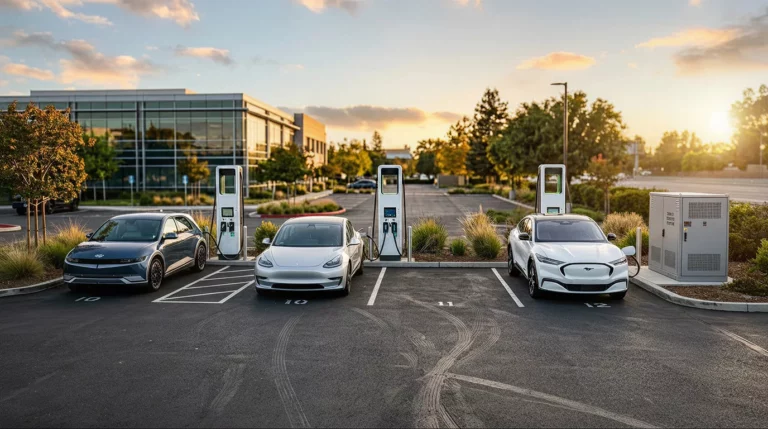
We developed a comprehensive, real‑time platform that transforms electric vehicle navigation from a source of anxiety into a seamless, predictable experience. The ecosystem connects drivers, fleet operators, and charge point networks through a unified interface that combines live charger availability, adaptive GPS routing, and traffic‑aware energy optimization — enabling both individual EV owners and large‑scale commercial fleets to minimize downtime, extend effective range, and operate with complete confidence.
The Fragmented Charging Landscape
Before this solution, EV drivers faced a disconnected landscape: multiple apps for different charging networks, unreliable status data (chargers shown as “available” that were actually occupied or out of service), and navigation systems completely blind to the vehicle’s real‑time energy consumption. For fleet managers, this translated into wasted driver hours, missed delivery windows, and inefficient depot charging schedules that escalated operational costs. The core challenge was to aggregate, validate, and actionize high‑frequency charging station data from dozens of independent operators and deliver it within a routing engine that thinks like an EV — constantly balancing energy, time, and traffic.
Real‑Time Charger Availability & Cross‑Network Aggregation
The platform’s data ingestion layer connects directly to Charge Point Operators (CPOs) through standardized protocols such as OCPI (Open Charge Point Interface) and OICP, as well as custom APIs for proprietary networks. It pulls high‑resolution status updates — per‑connector availability (Available, Occupied, Charging, Offline), power output (kW), connector type (CCS, CHAdeMO, Type 2), and current pricing — every 10–30 seconds. A stream‑processing pipeline (Apache Kafka + Flink) deduplicates, normalizes, and cross‑validates these feeds against crowd‑sourced check‑in data and historical reliability patterns. The result is a single, trusted source of truth that displays not just whether a station is “free,” but the probability it will remain free by the time the driver arrives.
A low‑latency push mechanism (WebSockets and SSE) updates the driver’s map and route in real time. If a charger becomes occupied en route, the system instantly recalculates alternatives, ensuring the driver is never directed to a dead end.
Live GPS Navigation Integration & In‑Vehicle Experience
Rather than forcing drivers to toggle between a charging app and their preferred navigation tool, the ecosystem embeds deeply into the vehicle and mobile experience:
-
Embedded Navigation – The routing engine runs as a drop‑in SDK for in‑vehicle infotainment systems (Android Automotive, QNX) and as a standalone mobile app with turn‑by‑turn voice guidance. It renders chargers directly on the navigation map with dynamic status badges.
-
Vehicle Telemetry Link – Via OBD‑II dongles, OEM APIs, or direct MCU integration, the platform reads the vehicle’s real‑time state of charge (SoC), battery temperature, and instantaneous consumption rate. This data continuously feeds the routing algorithm, eliminating the guesswork of static range estimates.
-
Multi‑Modal Guidance – For last‑mile or urban deliveries, the system guides the driver to the exact charger bay within large parking structures, often using indoor mapping or augmented reality overlays.
Traffic‑Aware, Energy‑Optimized Route Planning
The heart of the system is a dynamic routing engine that treats energy as the primary constraint rather than distance or time alone. It constructs a detailed digital twin of every journey:
-
Vehicle‑Specific Energy Model – A physics‑based consumption model accounts for vehicle make/model, battery capacity, current SoC, auxiliary load (HVAC), payload weight, and even tire pressure. This model is calibrated continuously using machine learning on historical trip data, improving accuracy to within 2‑3% over thousands of miles.
-
Terrain & Weather Ingestion – Elevation profiles from high‑resolution DEMs (Digital Elevation Models) and real‑time weather feeds (wind speed/direction, temperature, precipitation) are integrated into the cost function, as they significantly impact EV range.
-
Dynamic Traffic & Speed Profiles – Live traffic data from multiple aggregators feeds a predictive speed‑profile model for every road segment. The engine forecasts energy consumption along candidate routes, not just travel time.
-
Intelligent Stop Planning – Instead of simply finding the nearest charger, the algorithm solves a multi‑objective optimization problem: minimize total travel time (including charging stops) while ensuring the battery never falls below a safety buffer. It selects stops based on charger power, estimated wait time, amenities, and cost — automatically balancing a fast 350kW top‑up against a slightly longer coffee break at a slower AC charger if the driver’s schedule permits.
The route is continually recomputed as conditions change: a sudden traffic jam ahead, a charger going offline, or better energy recovery on an alternative downhill route can all trigger a seamless in‑route re‑plan, presented as a polite “faster/cheaper route available” suggestion.
Minimizing Wait Times Through Predictive Intelligence
A critical pain point for drivers is arriving at a charger only to find a queue. The platform addresses this with a predictive wait‑time engine:
-
Real‑Time Occupancy & Connector‑Level Tracking – Not just “station status” but per‑connector state and session progress (energy delivered so far) where available, allowing the system to estimate time‑to‑vacancy for each occupied connector.
-
Historical Pattern Analysis – Time‑series models (Prophet, temporal fusion transformers) learn usage patterns by location, day of week, and even weather, predicting congestion windows before they happen.
-
Queue Forecasting – For stations that provide queue APIs or for those with high‑frequency check‑ins, the engine maintains a virtual queue model, predicting how long a new arrival is likely to wait and factoring that into route selection. If a station is predicted to have a 20‑minute wait but another 10 minutes away is free, the system directs the driver there, saving total trip time.
Purpose‑Built for Commercial & Consumer Fleets
The platform operates in two tightly integrated modes:
-
Consumer Mode – Focused on peace of mind: simple “Find a charger” search with filters (fastest, cheapest, along route), animated range‑on‑map confidence rings, and proactive “charge now to reach destination” alerts that prevent strandings. Payment integration across networks eliminates the need for a dozen RFID cards or apps.
-
Commercial Fleet Mode – A layer of fleet‑wide orchestration overlays the core routing. Fleet managers define operational constraints (vehicle range, cargo capacity, delivery time windows, depot locations) and the system:
-
Assigns optimal vehicles to routes based on real‑time battery levels and charging schedules.
-
Dynamically schedules depot charging during off‑peak electricity tariffs, respecting grid capacity limits and vehicle departure times.
-
Monitors driver behavior that impacts range (speeding, harsh acceleration) and provides nudges to improve efficiency.
-
Generates consolidated performance dashboards, showing fleet‑wide energy cost per mile, charger utilization, and CO₂ savings, with exportable reports for sustainability compliance.
-
Impact & Scalability
Pilot deployments with a mixed fleet of last‑mile delivery vans and long‑haul electric trucks demonstrated:
-
31% reduction in total trip time (driving + charging) by eliminating unnecessary stops and selecting faster, less congested chargers.
-
22% decrease in charging‑related wait time through queue prediction and dynamic re‑routing.
-
18% improvement in vehicle utilization for commercial fleets, as optimized charging schedules reduced depot dwell time.
-
Scaled to millions of charge points using a cloud‑native microservices architecture (Kubernetes, Redis, PostgreSQL/PostGIS, and a React/MapLibre frontend). The platform is designed to accommodate future V2G (vehicle‑to‑grid) bidirectional flows and integration with renewable energy availability for truly green routing.
The solution serves as the foundational layer for an EV‑first transportation network, turning charging stops from a logistical burden into a data‑driven advantage for both everyday drivers and commercial operators.